Sunday, September 25, 2022

From the Desk of Jim R, Take 2, Column 339, A Review: "God of Carnage" (The Arts at Angeloria's)

By James V. Ruocco

"Theatre is a mirror, a sharp reflection of society. There is no point in writing theatre if it's not accessible."
(Yasmina Reza, Playwright)

Case in point: "God of Carnage," a serious affair where middle-class menace, bullying and serio-comic despair are captured magnificently by the playwright.

The stakes, of course, are high - awkward small talk, accusation, momentary violence, manifested drunkenness, verbal swordplay, forced bonhomie, antic mood swings, manipulation.
And, well, they should be.

Here, as in the playwright's other cynical, ferociously robust works - "Art," "Life x 3," The Unexpected Man," "The Passage of Winter" - everything hinges on the casting, the preparation, the creative process, the direction, the staging, the live performance and the defining shrewdness of how it all comes together.

On Broadway - March, 2009, to be exact - the exhilarating frisson of James Gandolfini, Marcia Gay Harden, Jeff Daniels and Hope Davis as two middle-class couples who meet one night to discuss and resolve a heated schoolyard fight between their two 11-year-old sons (one boy strikes the other with a stick that knocks out his two front teeth), prompted an animated, moment-to-moment verbal dance and tango of unforgettable madness, delirium and razor-sharp imagination that was not easily forgotten. Three years earlier, in London's West End, Ralph Fiennes, Tamsin Greig, Janet McTeer and Ken Stott, evoked the same perched savagery and argument illuminated in Reza's page-turning, aggressive playscript.

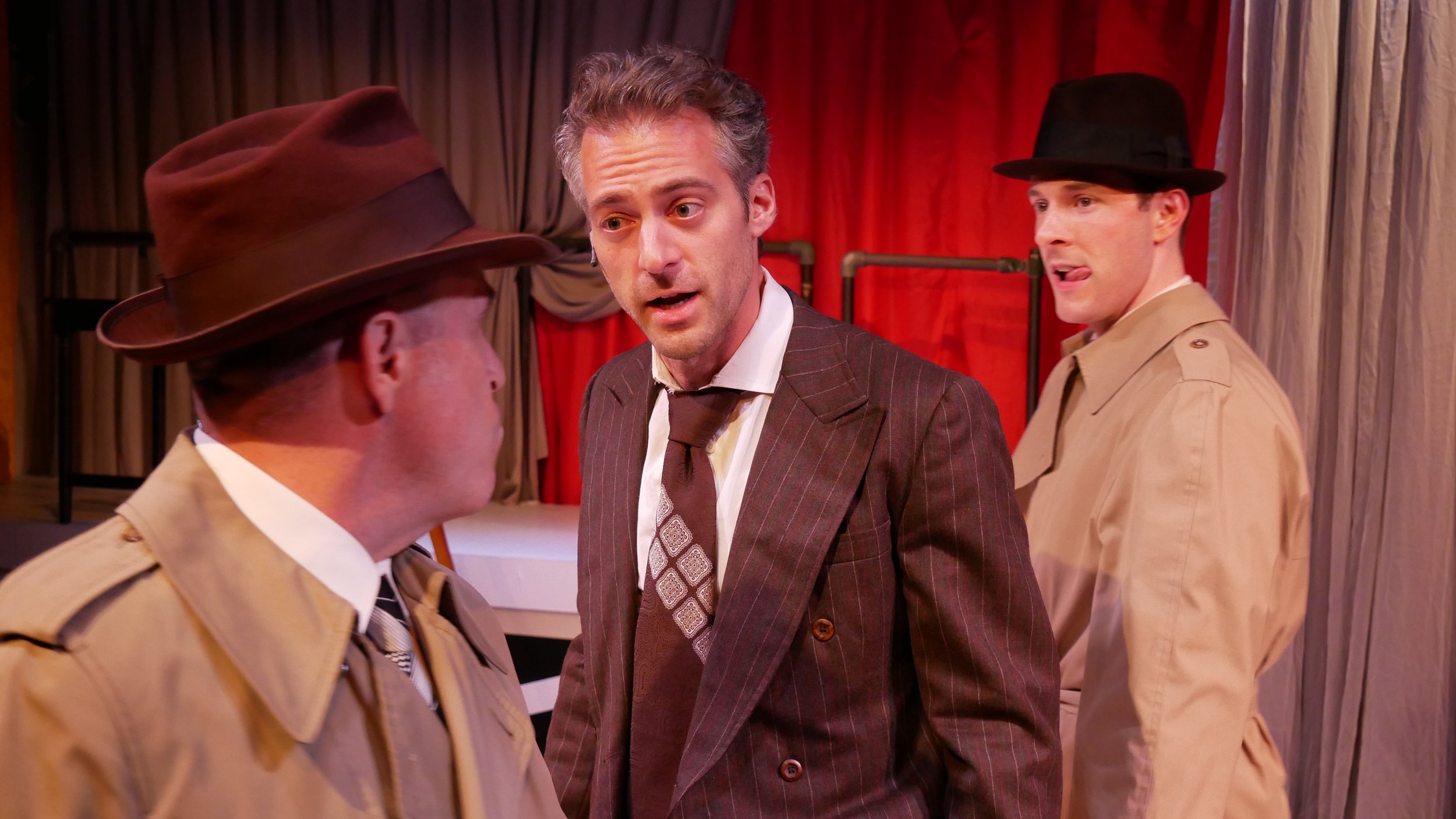
At the intimate, immersive Arts of Angeloria's where "God of Carnage" has settled in for an important, two-week run, the numbing effect of Reza's acerbic action and stinging verbiage is very much the same with Kevin Pelkey, Cristin Daley, Nicole Zolad and Jason Scot assuming the popular roles once played by the original Broadway and London cast. Every joke, every insult, every quirk, every swing, every tic and every rant is played full tilt by this incredibly talented non-Equity quartet, thus, making it bristle with a life force, an acidity and a primitive, biting aggression of all its own.

Intelligent.
Truth-Telling.
Capable.
Finely Shaded.
Game-Changing.
Definitive.

This revival not only has a wonderful sense of intuition about it, but it is potent and passionate and massive with very fierce, very predatory edges.
As theatre, it is liberal and angry. It is compassionate and nuanced. It is mouthy and perverse. It pulls no punches. It dissects society with stinging impact. It also retains the crackling precision, the fiery cynicism and the symbolic abundance commandeered by its creator. Elsewhere, a running gag of incessant cell phone interruptions mixed with characters continually switching sides, having anxiety attacks, spouting four-letter words, getting completely bladdered by booze or accidentally revealing their true colors in rapid fire succession, heightens the play's vitriolic energy.

"God of Carnage" is being staged by actor/director Joey Abate whose savvy, intuitive take on Reza's angry, mischievous character study simmers with harmonious analogy, skin-deep truism, observed construction, giggling sprite and fiery abandonment. As both director and storyteller, he accepts the playwright's rules of the game, her pragmatic undercurrents, her skillful hypocrisies, her blatant pronouncements and her dicey conflicts and crafts a meaty mind game of sorts that taunts and teases, spits and brays, fucks you over, toys with your senses and plunges you head-first into the play's well-timed jokes, arguments, confessions, outbursts and breaking points.

True to form, this revival unfolds with dialogue and conversations that demand the right pacing, the right rhythms, the right mindset, the right motivation and the right stimulation. One wrong move, one missed cue or one abrupt halt in the action and it's over. Just like that.
Abate, of course, never lets that happen. He experiments. He orchestrates. He digs deep. He takes chances. He surprises. He amuses. He entertains. He has great fun. He knocks you over. he plays mind games. But in the very best of ways. He not only knows the play inside out, backwards and forwards, but creates a stinging, verbal three-ring circus of sorts (shades of Edward Albee's "Who's Afraid of Virginia Woolf ?") that keeps coming at you from all directions with an emotive thrust and scrutinization that keeps to Reza's triggered conceit, its distinct criterion and its locked horns ante.

As penned by the playwright, "God of Carnage" is very rhythmic. It's all beats and measures. It's timed and played to the second. It's all very exact and specific. Even the overlapping voices of two or more characters talking at the same time requires the same split-second acumen. Not to worry, though. Abate's fiendishly clever manipulation of the script is real-time ready, playful, stylish and outrageousness. The fact that you never quite know what's around the corner or how things will actually play out heightens the play's appeal, its story arc evolution and its numbing conclusion.

Directorially, Abate also embeds the entire production with a Pinteresque tug-of-war, captured so intuitively under his tutelage via choice stage direction, movement and in-the-moment fluidity. Perfectly timed, chimed, executed and delivered, it's a demanding feat, but one Abate excels with flying colors.

In the role of Michael, an uncouth husband, father and self-made businessman very eager to create peace between the two conflicted schoolboys, Kevin Pelkey delivers a raw, polished and showstopping character portrait (he's absolutely amazing to watch throughout the entire 80-minute production) of a typically restless individual who tries too hard, makes racial slurs and denounces child-rearing as something completely wasteful. His comic timing is impeccable. His line delivery is flawless. He nails the emotional heart and soul of his character's persona perfectly. He can be truth or dare at once. He's completely in sync with Reya's interpretation of the role. And often, when just standing there listening and observing, we know exactly what he is thinking. 

As Michael's judgmental, uptight, opinionated wife Veronica, a woman who is writing a book about the Darfur atrocities and hopes to maintain a peaceful resolve for her son's injury, Cristin Daley is a whirlwind of rational deliberation, personal bias, emotional pain and thin-lipped liberalism. She's not only right for the part, it's a role she owns and plays with complete honesty, drive, passion and amazing serio-comic flourish. Smartly attuned to Reza's linguistic oeuvre, she displays the right rhythms, tics and beats in an open arena where dangerous mind games and limited visions collide within the marvelously sketched limits of the playwright's controlled, wickedly funny blueprint. Like Pelkey, she too is amazing to watch as she shifts gears effortlessly without ever once missing a beat. 

Jason Scot, cell phone in hand for the part of Alan (it's eventually tossed into a vase of fresh tulips), a slippery, chatty, self-centered, high-powered, corporate/libel lawyer representing a pharmaceutical company about to be sued over one of its new products that has harmful side effects, delivers a wildly inventive roller-coaster-ride of a performance that gets under your skin, slaps you in the face, pisses you off and makes you want to get up from your seat and punch him very hard in the stomach for being such a smarmy, first-class prick. As an actor, he pulls you right into Alan's convoluted story, his shaky marriage, his slimy business tactics and his pacy anxiety. Elsewhere, his remarkable ability to shift gears from story to cell phone (he cleverly milks and orchestrates the character's attachment to his mobile) within a millisecond, is brilliantly rendered as is his complete breakdown, a wonderfully balanced actor's moment that triggers convulsed laughter and cheers in all the right places.

As Alan's wife Annette, a woman on the verge of yet another panic attack who is constantly annoyed by her husband's feckless behavior and total ignorance, Nicole Zolad gives a standout, ovation worthy performance that is honest, electrifying and perfectly calibrated. As "God of Carnage," evolves, she is very clear and very focused about her character, her dialogue, her conversations, her moves, her behavior, her expressions and her interaction with the other on-stage actors. It's a part she plays brilliantly with a smartness, purpose, honestly and a broodingly intense desperation that is thrilling to watch and discover.
Another key element in Zolad's characterization is that fact that Alan's behavior literally makes her sick. Here, in a scene that is effective, but slightly toned down by Abate for shock value, Annette vomits all over Veronica's precious art books and everything else on her coffee table. On Broadway, in London and in the film adaptation "Carnage," it is staged in gory, graphic detail with lots and lots of puke spilling everywhere. Here, the rogue vomit is in short supply. Zolad's perfectly timed take on this clearly unsettling moment, nonetheless, still gets the point across in much the same way as Reza intended. 

Tense, crafty, satirical, edgy and unpredictable, "God of Carnage" is an exhilarating piece of theatre written with great insightfulness and craft by Yasmina Reza. Under Joe Abate's smart, keen, unrelenting direction, the cast of four - Pelkey, Daly, Scot, Zolad - deliver confident and determined performances that crackle with such excitement, you forget that you are in a theater watching a play.
A bold, disturbing work of tremendous power and observed disintegration, this revival of "God of Carnage" is fresh, superb and exciting on all levels. It is chock full of wit, shrewd humor and a great amount of fun. It's numbing effect lingers long after the play has ended.  

"God of Carnage" is being staged at The Arts of Angeloria's (223 Meriden Waterbury Turnpike, Southington, CT), now through October 2, 2022.
For tickets or more information, call (860) 426-9690.
website: artsatangelorias.com


Thursday, September 22, 2022

From the Desk of Jim R, Take 2, Column 338, A Review: "Rent" (Downtown Cabaret Theatre)


 By James V. Ruocco

It's a source of joy, strength, beauty and opportunity.
Then, now and always, the music and lyrics of the much-loved 1996 musical "Rent" are unmistakably catchy, inspiring and timely.
And well, they should be.
Like all great music or art, if you prefer, they have acquired a history, a rhythm, a pulse, a thrill, a life and a universal vitality that goes way beyond the Bohemian stratosphere from whence they came.

"Five hundred twenty-five thousand
Six-hundred minutes.
Five hundred twenty-five
Moments so dear

Five hundred twenty-five thousand
Six hundred minutes
How do you measure - measure a year?
In daylights - in sunsets
In midnight's - in cups of coffee
In inches - in miles
In laughter - in strife"

"There's only us, there's only this.
Forget regret, or life is your's to miss.
No other path, no other way.
No day but today"

"How do you document real life
When real life's getting more like fiction each day?
Headlines, bread-lines blow my mind
And now this deadline, "Eviction or pay." Rent!"
 

No matter how you look at it - left, right, upside down or sideways - the legacy that is "Rent" remains the brainchild of the very man himself - 35-year-old Jonathan Larson, the visionary composer, lyricist and author of the hit musical who died of an aortic aneurysm on January, 25, 1996, just days before his ground-breaking rock opera made its official debut off-Broadway to heightened fanfare and subsequently, was later transferred to Broadway in April of the same year, where, it became the "Hamilton" of its day.
This, of course, came as no surprise to anyone in the cast, the audience, the producer's chair, the backstage crew or the creative team.
"Rent" was a Broadway musical, like no other.

Diverse.
Revelatory.
Unhinged.
Prolific.
Captivating.

Winner of the 1996 Award for Best Musical and Best Musical Score, among others, "Rent" completely changed the face of musical theater - Broadway, West End, National Tour - with an adrenaline-pumped, frenzied musical score of seamlessly mixed salsa, reggae, opera, gospel, tango, electric rock, pop and Sondheim-tinged eclecticism.
Its angst-filled story of gay and straight characters fighting for survival in N.Y 's bohemian milieu of St. Mark's Place was fueled with grit, hope, boldness, revelation, lust and unabashed vitality. And when the "Rent" cast stood on the edge of the proscenium stage facing the audience at the start of Act II to sing the harmonic anthem "Seasons of Love," a tearful reminder of living and measuring life on borrowed time, your heart just broke and broke and broke.
 

At Downtown Cabaret Theatre, where "Rent" has settled in for a five-week run that jump starts the venue's 2022-2023 season, the in-the-moment exhilaration and pseudo pop concert feel of its roots and identity set the stage for an explosive celebration of musical theatre that does full justice to Jonathan Larson's vision, his concept, his story, his rock score and his myriad of colorful, glorious characters.

The cast is new. The production is new. The direction is new. The staging and the choreography are new. The sets are new. The lighting and the costumes are new. The sound effects are new.
But this is "Rent" the way it was meant to be performed in all its raw, gritty, sexy and heartfelt glory.

It is thrilling and uplifting.
It is celebratory and privileged.
It is bold and brazen.
It is real and thought-provoking.
It is raw and edgy.
It is urgent and romantic.
It is vibrant and hauntingly touching.
It jumps.
It snaps.
It pops.
It entices.
It invigorates.
It delivers.
 

Everything about this production is absolutely perfect.
It basks in the atmospheric eclecticism and primal frenzy it is famous for. 
It is also strikingly original.
True to its roots, the Downtown Cabaret Theatre revival of "Rent" kicks into orbit with invigorating pop and dash and never once shows any sign of slowing down or running out of fuel. It works everyone on stage and in the audience into a feverish, voltage-charged lather, which, when you think about it, is probably what Larson envisioned all along for his mind-blowing bohemian character opus.
The book, as written by the late composer and lyricist, deals openly and creatively with truthful, personal stories about addiction, eviction, materialism, queerness, struggle, legacy, sexual identity, transgender activism, death, poverty, individualism, urban redevelopment and AIDS. Its raw, stringent language ("fucking weird," "fucking bitch," "dildo," "clit club," "queer," for example), hits hard and home without any form of hesitation or censorship. The characters are full-on and reflective of their impoverished East Village milieu. And nothing is taken for granted, pumped up or thrown in to knock the audience off-center or kick them in the ass.

The defining pulse, sting and thrust of the show is Larson's inventive, optimistic, character-driven musical score. His creative and defining mix of anthems, duets, ballads, rock songs, plot-driven laments, rifts, pronouncements, declarations and lively showstoppers seamlessly reflect the anguish, rage, conflict and emotion he intended for "Rent."
"La Vie Boheme," "Another Day," "One Song Glory," "Light My Candle," "Rent," "Out Tonight," "I'll Cover You," "Take Me or Leave Me," "Seasons of Love," " "Without You," "Santa Fe," "Over the Moon," "What You Own," "Today 4 U," "Tango Maureen," "Will I?" "Your Eyes"
It's all here and nothing gets lost in the translation.
Larson's recurring themes - living on the edge, taking chances, tragic losses, fighting for survival, a strong sense of community, death and adversity, homophobia, shielding loved ones from danger, unspoken truths - are emotionally addressed and melodically revisited in the DCT mounting which is musically directed by Zachary Kampler, a vocal supervisor, musician and storyteller whose sharp, fierce, quick-shot handling of the pre-recorded material unfolds with the dizzying frenzy, spirit and magic of a great artwork set in motion.
Once this revival makes its presence known through the catchy, pulsating beat of the opening title song "Rent" - a fervent cry for help channeling the frustrations of twenty-somethings faced with financial hardships - Kampler cues the music through precise, seamless, well-timed beats and rhythms that follow every twist and turn of the story (the musical takes its cue from Puccini's "La Boheme") with the right sort of involvement and navigational detail intended by Larson.
The sound quality is magnificent with no room for error as "Rent" rips through moments of spontaneity, argument and escape, exuding an orchestral fluidity and flourish, mixed with a bustle or two of nostalgia that is hauntingly conceived and played with great warmth, passion and excitement. Timed to the millisecond, there is real immediacy and realization here that keeps the production centered, focused and productive throughout.
 

The irresistible draw of this "Rent" - aside from the music, that is - is the emotional intensity of the narrative, as shaped by director Andrea Pane, an artist and visionary whose connection to the piece is dynamic, controlled, driven and bursting with wonderful, tireless energy, electric tension and sonic thrust and boom. As guide and directorial storyteller, he crafts a perfect portrait of Larson's iconic story that is full-voiced and full-throttle, blended seamlessly together with an intoxicating mix of passion, buzz, vibrancy and exquisite detail.
If you've seen "Rent" before (is there anyone out there who hasn't?), this revival, though faithful, in part to Larson's original conceit is not a direct, copycat of the 1996 Broadway musical, the subsequent London edition or the recently staged "25th Anniversary Farewell Tour." And that is meant as the highest complement to Pane, who, as director, isn't interested in dusting off the blueprints of previous "Rent" productions or fashioning a play-by-the-numbers musical steeped in nostalgia or positioned to replay every moment, song or story point exactly as it was done 25 years ago. Pane dances to his own beat. And that is exactly what puts him at the top of his game.
Here, he takes chances. He tries things differently. He looks at new ways to stage key story points and elements of the popular musical. He also opts for an immersive, widescreen process of staging that opens up the material in thrilling three-dimensional fashion that heightens and enlightens the "Rent" live performance strategy, thus giving it a uniqueness all its own. 
As interpreter, he brings some of the upstage action downstage, front and center, a directorial change that makes certain actor-audience moments much more powerful and effective. When possible, he gives certain ensemble members more to do by either adding them into scenes they normally wouldn't be a part or. Or he brings them full front with creative movements, blocking and body language which cements their importance to the ongoing story. He also brings an enlivened twist and perk to the show's many tune ups, voice mails and holiday greetings, which every RENT-head in the audience can recite verbatim.
Elsewhere, he proudly amps up the heat to deliver the musical's wildly pulsating opening anthem of "Rent," which sets the stage for the many of the important events that follow. The hilarious "Over the Moon," based on the 18th century nursery rhyme "Hey Diddle Diddle," is ignited by brilliantly orchestrated over-the-top kitsch and angst that thrusts it high flying high and onward. The wickedly feverish "La Vie Boheme," which closes Act I, also unfolds with an enlivened merriment that makes it even more enjoyable than it was before.


Choreography is key to the evolution and enhancement of the "Rent" story and Carly Jurman's playful, lively, character-driven dance movement ("Tango Maureen," "Today 4 U," "Out Tonight," "La Vie Boheme," for example) provides the necessary pulse, thrust and oomph necessary to get the juices flowing. It is original. It is energetic. It is modern. It is confident. It is expressive. It is athletic. It fits perfectly into the dramatic fabric of the story. It is also purposely amped up to keep this revival of "Rent" fresh and exciting. And much like that of the original work, it allows the audience to feel the emotions conveyed in the show by every one of the characters.
What's especially fun about Jurman's dance moves is that she takes chances and runs with them. Her unique take - decidedly different from that of the choreographed work of the show's predecessors - adds color, excitement and personality to the already familiar patterns, movements, styles and beats associated with "Rent." It works on every level imaginable while still maintaining the spirit, irony and excitement of the original musical and its voltage-infused choreography.
 

Playing the now-iconic role of Mark Cohen, Sean Davis is the perfect fit to bring the character of the young filmmaker to life. He's charismatic. He's confident. He's personable. He's driven. Acting wise, he taps believably into Cohen's psyche and delivers a fascinating performance that is so true to the show's sense of time, place and story. He also nails all of the familiar character traits that Larson set forth for Mark. Vocally, he imbues Mark's many songs with a rich-sounding musicality that is direct, immediate and refreshing. His knowledge and understanding of the "Rent" material also fuels and ignites his feel-good portrayal of the East Village filmmaker. 

In the role of Roger Davis, the restless, singer/songwriter whose previous girlfriend committed suicide once she learned of her AIDS diagnosis, Dante DiFederico convincingly projects the emotional intensity and epic despair of his character with immersive, beguiling solidity. His raw, anguished rendition of the popular ballad "One Song Glory" is rendered with appropriate pain and pathos as is "What You Own," the character's big, fiery, harmonious duet with Mark (Davis excels here as well) in the middle of Act II.
Berlin Charles' sassy and sparkly portrayal of Angel, the young gay drag queen who is dying of AIDS, is a whirl-and-twirl star turn of high kicks, glitter and individuality that the actor exudes with camp, reflection, gayness, engagement and accentuated flamboyance. He also turns Angel's big musical numbers - "Today 4 You" and "I'll Cover You" - into major showstoppers that earn him ovation-worthy applause at every musical turn. And when his character shows up at the conclusion of the Act II finale, there isn't a dry eye in the house. 
 

As Mimi Marquez, the drug stoked dancer with a serious heroin habit, Juliana Rivera deftly projects the sultry, slippery, sensuous and alluring persona intended for her character. Dancing wise, she cuts all the right moves liked a skilled acrobat allowing nothing to stand in her way. There's also wave of erotic electricity in "Out Tonight," her big dance-and-song solo in the middle of Act I rooted in a dance aesthetic of sheer fire, reinforced by an artistic strength and confidence of quicksilver application. Vocally, she also imbues "Light My Fire" and "Without You," her savvy duets with Roger, with a warmth and passion that smartly reflects the heart and soul of the original material.


Casie Pepe Winshell and Kelsey Senteio create all the right, necessary sparks and passion as the touchy-feely, sometimes combative, sometimes argumentative lesbians Maureen Johnson and Joanne Jefferson. Together, or alone, they each bring plenty of unabashed charm, flair, excitement and sizzle to their individual roles. Their big duet "Take Me or Leave Me" unfolds with enough fire and snap to cause a major power outage. "Over the Moon," Maureen's wonderfully wicked protest number is so impeccably conceived and timed, both comically and vocally, it deserves a standing ovation in itself.  It's one of Act I's many showstoppers.
Everton George, in the pivotal role of Tom Collins, is both sincere and heartfelt as Angel's newfound boyfriend and lover. He plays the part with an emotional sweetness, warmth and charm that works especially well. And when it comes time for him to sing his character's poignant Act II reprise of "I'll Cover You," George stops the show with this tear-drenched vocal. His serious vocal heft makes this particular song soar and wound with applause worthy, chilling resonance. Martin Garcia also makes a strong impression as Benjamin Coffin, the local landlord and former roommate of Mark and Roger who shows up demanding "last year's rent."
The "Rent" ensemble - so full of life and love - play a variety of different roles throughout the two-act musical including artists, drug users, homeless people, parents and members of an important HIV/AIDs support group. They are Jessica Pescosolido, Daniela Sawyer, Brodey Ott, Sophie Katz, Steve Bell, Cierra Jordan, Markiss Roberts and Mason Sacco. The edgy contributions of all eight - exceptional performers and singers in their own right - are heightened by fresh, spontaneous, individual dramatic, humorous and musical turns that effectively portray Larson's realized, realistic snapshot of New York East Village life, circa, 1989 and 1990.  

There's no show quite like "Rent" and Downtown Cabaret Theatre proves "there's no day but today" for this iconic 1996 Broadway musical created by the late, great Jonathan Larson.
Its prism of life, as seen through the eyes of Mark Cohen's camera, is gloriously conceived by director Andrea Pane who charts the familiar story of East Village bohemia with edge, intrigue, pseudo pop spine and Technicolor twinkle.

There's real energy, thrust and vocal magic here, as the "Rent" cast use song, storytelling, dance and characterization to thrilling advantage channeling the inventive, intricate score of Larson's creation, going full tilt to celebrate the universal resonance and irony of the piece and everything else it has to offer.
It's an in-the-moment celebration of life and love that bears its soul loud and proud, mixed with struggles, reflections, conflicts and thoughts that not only find a glimmer of poignancy, but suggest a proudness that is rich, observant, kind and open-hearted.

Photos of "Rent" courtesy of Andrea Pane

"Rent" is being staged at Downtown Cabaret Theatre (263 Golden Hill St., Bridgeport, CT), now through October 16, 2022.
For tickets or more information, call (203) 576-1636.
website: dtcab.com


Tuesday, September 20, 2022

From the Desk of Jim R, Take 2, Column 337, A Review: "Sunset Boulevard" (Music Theatre of Connecticut)

By James V. Ruocco

"You used to be big," chimes penniless Hollywood writer Joe Gillis.
"I am big," cries the woman he comes face to face with in classic big screen movie fashion. "It's the pictures that got small."

A great line.
A great moment.
A sneer. A swoop. A smile. 
An edge of madness.
A new beginning.
Or is it, the beginning of the end?

A glimpse into the life of Norma Desmond, a forgotten silent screen film star living in exile, but dreaming of a comeback pioneered by the great Cecil B. DeMille is the centerpiece of Andrew Lloyd Webber's grand 1993 musical opus "Sunset Boulevard," which draws its inspiration from the 1950 film of the same name.

Edgy.
Hypnotic.
Passionate.
Grand.
Delusional.

This is musical theatre steeped in gothic flamboyance, resonant melodrama, cinematic parody and romantic reflection - all rolled into one.

The good news - that when done right - it works magnificently.

Delivered with surprisingly intimate enhancement, creamy command and high standard resolve, Music Theatre of Connecticut's thrilling revival of "Sunset Boulevard" is an attractive, immersive, powerful piece of musical theatre voiced with affirming mystery, playful abandon, rooted film noir, blunt attitude and grandiose narrative storytelling.

It is humorous and engaging.
It is as delightful as it is deep.
It is tight and old fashioned.
It is ambitious and full-hearted.
It is Hollywood classic lost in a world of intertwined illusion, glamour and pathos.
It is faithful to the movie, its remembered past, its darkness and its dizzying, acceptable camp flourish.

Abandoning the luxurious grandeur of both the original West End London production and its subsequent Broadway incarnation, director Kevin Connors (""Ragtime," "Falsettoland," "Next to Normal," "Cat on a Hot Tin Roof") opts for a simple, stately interpretation where minimal draperies, sets pieces and props are secondary to the retelling of the Norma Desmond/Joe Gillis story. Here, music, character, words, dialogue and lyrics bask in the spotlight, accompanied by the sumptuous sound of the MTC orchestra and the vocal brilliance of both the ensemble and the leading players. It's a directorial choice that is consistent, persuasive, inspired and completely visionary.
As interpreter and storyteller, Connors never once misses a beat. Well versed on the plot machinations and irony of the Billy Wilder screen version and the lush musicality of Webber's original production, he brings new ideas to the work using striking, simplified takes, pauses and focus to create a one-on-one trajectory between actor and audience. From start to finish, it's all chillingly understated, elegant and impactful, conditioned with real thought, real drama and inevitable edge and confrontation. The closeness of the theater's three-quarter staging environs complements and cements Connor's vision, his conjuring, his clarity and his intuitive ardor.

The musical score for "Sunset Boulevard" - an engrossing mix of ballads, duets, ensemble turns and cinematic anthems - bears the Andrew Lloyd Webber creative stamp (he composed the music) and that of his collaborators Christopher Hampton and Don Black (they wrote the lyrics). The songs, in order of how they are performed in the storytelling of the two-act musical are: "Overture," "Prologue," "Let's Have Lunch," "Every Movie's a Circus," "Surrender," "With One Look," "Salome," "The Greatest Star of All," "Every Movie's a Circus (reprise)," "Girl Meets Boy," "New Ways to Dream," "The Lady's Paying," "The Perfect Year," "This Time Next Year," "Entr'acte," "Sunset Boulevard," "There's Been a Call," "As If We Never Said Goodbye," "Surrender (reprise)," "Girl Meets Boy (reprise)," "Eternal Youth Is Worth a Little Suffering," "Too Much in Love to Care," "New Ways to Dream (reprise)" and "The Final Scene."

Webber's taste for the dramatic - via music and orchestration - works wonders here as he pays homage to the original Billy Wilder 1950 film noir movie classic "Sunset Boulevard" that starred Gloria Swanson as Norma Desmond and William Holden and its Oscar-winning score by Franz Waxman.  It's pointed. It's set. It's determined. It's creative. It speaks volumes.
As the two-act musical evolves, his compositions smartly reflect the buzz and snare of the movie industry, its backlot players, its forgotten stars, its entrapment, its cynicism, its darkness, its struggles and its dream of, one day, making it big on the silver screen. Hampton and Black, in turn, strike back with choice, motivated lyrics that recall the acidity, the angst, the melancholy, the bite and the acknowledgement of the black-and-white movie.
Musically, it's a collaborative effort, filled with the right touches and the right flourishes of sound, irony, string and functioning color, complemented by orchestrations and words that carefully cement the emotional meaning of each song, its tone, its passion, its sense of belonging and its commitment to the evolution of the "Sunset Boulevard" story.

As musical director for the MTC production of "Sunset Boulevard," David John Madore ("Fun Home," "Mamma Mia!" "Falsettoland") addresses the Webber/Black/Hampton score with wit, imagination and devotion, thus, capturing the darkness, the romanticism and melodrama of the piece, coupled with well-orchestrated bits of silent screen nostalgia, flickering eccentricity and quickfire snap and cynicism. It's a task he takes to heart with much-loved innovation, illumination, intensity and evident enjoyment. The trio's musical language and its unique combination of words and music also comes full circle with effective, game-changing orchestral sophistication and brilliance.

For this production, Madore - doubling as both conductor and piano player - has assembled a first-rate team of talented and dedicated musicians to bring the "Sunset Boulevard" score to life at MTC. They are Tony Bellomy (keyboard II), Jerold Goldstein (keyboard III), Gary Ruggiero (reeds), Nate Dobas (percussion) and Rich Zurkowsky (bass). Vital, vigorous and attentive, this orchestral ensemble display a sterling sound and style that brings exhilarating highs to the musical score, its interpretive balance, its tonal challenges, its ripened qualities and its registrational grouping of musical numbers.
Here, commitment means everything. 


As "Sunset Boulevard' evolves, there is a natural completeness to the musicality and song-by-song commentary. Yes, it's rehearsed. Yes, it's timed. Yes, it's positioned to showcase the different vocal range and variety of everyone on stage. What makes it special, however, is the rolling complexity and shading of the actual music, its sensual grace, its expression and melody and its free-flowing temperament, vitality and palpable enthusiasm. There is impeccable command here, evenly maintained by Madore and company, on all levels, registers and orchestral colors.

"Sunset Boulevard" stars Elizabeth Ward Land as Norma Desmond, Trevor Martin as Joe Gillis, James Patterson as Max Von Mayerling, Sandra Marante as Betty Schaefer, Jacob Sundlie as Artie Green, Philip Callen as Sheldrake & Others and Jeff Gurner as Cecil B. DeMille & Others.

In the role of a faded movie star looking to return to her former glory as a box-office icon, Elizabeth Ward Land infuses the part of Norma Desmond with true star glamour, madness, grandeur, desperation and wide-eyed amazement and enthusiasm. It's a showy part that asks the actress to pose, to preen, to sweep, to sneer, to swoop and to teeter to the point of unashamed parody, but she does it her way - with ripe conviction, edge, dignity and magnified greatness. Looking very much like Gloria Swanson (the resemblance is uncanny) did in the 1950 Billy Wilder film - a complement of the highest order - Land inhabits the role's epic despair and delusion affectingly and believably with stunning acumen, range, accuracy and intensity. But she's no copycat. She's an original who great fun with the role while putting her own personal stamp, grasp, investment and command on the much-coveted role. Vocally, she's classically beautiful, singing such showstoppers as "With One Look," "As If We Never Said Goodbye," "Surrender," "The Perfect Year," "Salome" - with certainty, wonderment, depth and variety, channeling the inspiration, drama and note-perfect brilliance of the "Sunset Boulevard" musical score.

Trevor Martin, cast in the role of Joe Gillis, the writer who allows himself to be kept by Norma Desmond, invests the part with dash, charm, sexiness, good looks, emotional resonance and sharp-edged ambition and collaboration. His vocals - "Prologue," "Sunset Boulevard," "Too Much in Love to Care," "Let's Have Lunch," "Girl Meets Boy"- are delivered not only with the crisp, powerful truism and flair reflective of his strong, natural hold on the musical elements of the piece, but with the wit, sarcasm and expression concurrent in the sweeping score, its suave, tart lyrics and the vitality of the proceedings, as shaped by both Connors and Madore. It's a passionate performance set forth with grace, great vigor, charisma and sculpted poise, which, in turn, makes his relationship with both Norma Desmond and Betty Schaefer real, honest and conflicted in grand, homage-spirited cinematic fashion.

As Betty Schaefer, Sandra Marante invests the part (she plays Gillis' attractive, aspiring writing partner) with a certain charm, clarity, personality and truthfulness that not only defines her important role throughout the production but gives it a strongness and purpose that is put to great use whenever she's on stage, most notably in her many scenes with Trevor Martin, her handsome co-star. Vocally, she possesses an amazing voice and range that is wonderfully refreshing, engaging and chock full of emotional certainty. If anyone is doing "Evita," Marante is the ideal candidate to step right into the spotlight as Eva Peron. Listening to her perform the beguiling, showstopping duet "Too Much in Love to Care" alongside Martin halfway through Act II only furthers that notion. Both performers build this song to such stirring effect, a replay would be most welcomed.

James Patterson, as Max Von Mayerling, Norma Desmond's former director and ex-husband, now dutifully positioned as the silent screen film star's trusty manservant and fierce protector, crafts a masterful, ovation worthy character portrait so brilliantly conceived and realized, he easily surpasses the well-established, barnstorming performances of Daniel Benzali in the original 1993 London production of "Sunset Boulevard," George Hearn in the subsequent 1994 Broadway incarnation and Allen Fitzpatrick who played the part in the 1998 second U.S. National Tour. Full of boldness, inner conflict and strong-felt conviction, he is captivating, majestic and touchingly sincere. Vocally, his rich bass-baritone range is seasoned opera-goer ready, intersected with wonderful clarity of tone and dynamic control when he performs the hypnotic "The Greatest Star of All" in Act II and the stirring reprise of "New Ways to Dream" in Act II.

Recharged with an honest, affecting intimacy that leaves a lasting impression, "Sunset Boulevard" is a haunting, hypnotic musical that demands to be seen not once, but twice, without question.
Its fearless gaze into the Hollywood of yesteryear is both haunting and swaying as is its properly balanced turntable of story, music, song, action and character.
As seen through the eyes of director Kevin Connors, its reconceived rendering at MTC is brilliantly etched and primed to perfection - performed by a stellar cast - all of whom create and communicate an evening of musical theatre that is sweet, strong, melodramatic, nostalgic and ultimately triumphant - and then some.
As was the case with "Ragtime" and "Falsettoland," is it yet another MTC work that speaks to the moment, digs deep for new discoveries and finally, basks in the chilling, truth-bending sweep set forth by its London-based originators.

Photos of "Sunset Boulevard" courtesy of Alex Mongillo

"Sunset Boulevard" is being staged at Music Theatre of Connecticut (509 Westport Ave., Norwalk, CT), now through October 2, 2022.
For tickets or more information, call (203) 454-3883.
website: musictheatreofct.com

Monday, September 5, 2022

From the Desk of Jim R, Take 2, Column 336, A Review: "Barbecue" (Hole in the Wall Theater)


By James V. Ruocco

A local park.
A picnic table and grill.
Food, drinks and liquor.
Balloons and streamers.
Talk, talk and lots of talk.
A family get-together.
An ordinary day, you ask?
Hell, no!

The electrified outdoor space depicted in Robert O'Hara's "Barbeque" isn't exactly "gatdam normal." Nor are any of the characters who populate the playwright's wise-cracking, addictive, hilariously paced comedic dramatization. 

Here, flamboyance, outrageousness, boldness and compressed quirkiness are a given.

"I'm gonna come over there and slap the fuck out of you with a hammer till your throat clap! And I means that. I'll beat you till I see white meat. Stupid ass fool."

"You probably don't even remember waking up this morning with all them damn pills you poppin."

"I was the one who told you not to be eating no damn corn out no damn can. It's them damn canned goods that give you that damn cancer. They put that damn cancer in all these damn canned goods."

"We might as well draw three gatdamn circles on this gatdamn cement floor, pitch a tent and hand out tickets because when ZIPPITY BOOM rolls up into this heah park, it's gonna be the Greatest Show on muthafuckin Earth."

"This crazy fool chopped his own mama's head off cuz she refused to give him her last damn cigarette."

With the groundwork laid, "Barbeque" is thrust into motion with tangy ambition, stand-up comedy mode, fierce lampooning, ruthless vision and razor-sharp insight, which, in turn, gives it just the right amount of bound-and-gagged kick, raucous clash and multilayered artifice.

In sync with the mind-blowing excitement of "She Kills Monsters" and the landmark relevance of "Days of Absence," "Barbeque" is yet theatrical coup for Hole in the Wall Theater and its continued commitment to present works of substance, scope, variety, fantasy and importance.

Hypnotic.
Surprising.
Framed.
Mirrored.
Complex.

"Barbeque" is an engaging experience with a catchy narrative, a plethora of colorful characters, a brisk perspective and a plucky terrain and blueprint that befits its freewheeling concept, cycle and adventurous evolution.

As scripted by O'Hara, "Barbeque" showcases the quirks, conversations and mood swings of the O'Mallery's, two parallel families (one white; one black) who have gathered together in the same area of a public park on the same day to perform an intervention on their methamphetamine, alcohol-addicted sister prior to sending her off to rehab in Alaska for three months.
Both sets of characters not only have the same names, but their whacked-out behavior, attitude, language and plan of attack is truthful, defiant, lively and chock full of obvious similarities as "Barbeque" dictates which group to showcase from scene to scene without any abrupt halts in the action, the story arcs, the plot twists, the arguments, the exchanges and the ongoing conversations of the two James T's, the two Lillie Anne's, the two Marie's, the two Adlean's and the two Barbara's.

This being a Robert O'Hara play, "Barbeque" addresses everything from poverty and addiction to social status and race along with candid remarks about prejudice, sibling rivalry, ignorance, injustice and black vs. white lineage. It also comes packaged with lots and lots of questions before the big reveal - a twisty surprise of sorts - is dropped at the end of Act 1. 

What is real? What is imagined?
Is this fact? Is this fiction?
Are these characters actors? Or are they real people in real, everyday situations?
Why do the five black characters have the same first and last names as the five white characters?
Is O'Hara staging a play? Is O'Hara staging a movie?
Why are certain elements of the story fabricated in one scene, but grounded in reality in the one scene that is played out before it?
What, pray tell, is really going on?

The richness of O' Hara's mind games, sloshing, plotting and verbal acidity is played out with targeted freshness and zippity boom by director Teresa Langston who amps up the heat, throws caution to the wind and flame broils fact vs. fiction with funny, recurring and insightful authenticity. Well aware of the playwright's skills, darkness and deception, she dials up the hilarity with apt, well-timed and resourceful appropriation. Yes, she knows the big reveal. Yes, she knows what's real and what isn't. Yes, she knows how the play will end. But as interpreter and storyteller, she never lets on or gives anything away without O'Hara's consent. Instead, she helms a solid portrait of familial dysfunction that keeps you guessing and guessing in between the trashy talk, the four-letter words, the bitching and the bickering, the nasty insults and the cruel jibes aimed and tossed freely into the faces of all ten characters.
Then, all of a sudden, it's showtime for Langston, the company and the audience.
The bomb drops, the plot changes, the characters get spooked or unraveled and "Barbeque" moves forward in an entirely new direction you never once saw coming. You sit back thinking, "What the fuck just happened?" But with Langston at the helm fueling the production with the new ideas, concepts and tricks of the trade, as dictated by the playwright, you willingly go along for the ride. How it all ends is anybody's guess.
As "Barbeque" evolves and continues, Langston smartly captures all the angst, satire, rage, ruthlessness and silliness of O'Hara's playscript through well-positioned staging, movements and blocking techniques that complement the play's excitement, charm, edge and curiosity. Here, as in "A Number," which Langston staged earlier this year at Hole in the Wall for Backyard Theater Ensemble, she paints an honest, immersive theatrical experience that is grounded, gripping and always alert. The mix of energies onstage adds to the overall excitement as does her embracement of the HITW theatrical space, its design team and its one-on one connection between actor and audience.

Want something that's both fun and different?
You find that here.

"Barbeque" stars Jamie Reopell and Drew John Ladd as James T, Nicole Roy and Marie Altenor as Barbara, Kirsten Easton-Hazzaa and Grace Clark as Marie, Lisa Bynes and Elizabeth Reynolds as Lillie Anne and Melissa Rostkoski and Jacqueline Davis as Adlean.
Well chosen for their individual roles, all ten performers bring impeccable comic timing, thrust and craziness to their characterizations which they showcase with palpable chemistry, uplift and demand. Everyone also gets his or her moment to shine (so, to speak) in the spotlight with standout passages, dialogue and one-liners that are played to the hilt and delivered with in-your-face accuracy, definition and style. 
Dressed alike, they also follow O'Hara's playful dramaturgical switch from white character to black character and back again with brilliant comedic timing, style and line delivery that hilariously reflects the lower middle-class background of their upbringing, education, career choices and fucked up/I don't care attitude when the going gets rough. For plot purposes, both groups are also featured in additional scenes (no spoilers, please) that add heightened velocity to the story and its big, red-carpeted finale  

An impressive piece of theatre that deals with some pretty heavy themes and situations, "Barbeque" is a gripping, fast-paced production that demands to be seen. It is funny. It is timely. It is offbeat. It is enjoyable. It is confidant. It is assured.
It also is delivered with the authoritative, remarkable gravitas that once again, places Hole in the Wall Theater at the very top of its game.

"Barbeque" is being staged at Hole in the Wall Theater (116 Main St., New Britain, CT), now through September 10, 2022.
For tickets or more information call (860) 229-3049.
website: hitw.org

Wednesday, August 10, 2022

From the Desk of Jim R, Take 2, Column 335, A Review: "Anne of Green Gables" (Goodspeed Musicals)

By James V. Ruocco

The image of girlhood, as envisioned by Canadian novelist Lucy Maud Montgomery in the popular children's classic "Anne of Green Gables" - first introduced to the literary world in 1908 - is one to admire.

Orphaned Anne Shirley from Bolingbroke, Nova Scotia, is outspoken, independent, determined and strong-willed. She's a true friend. She places a high value on education. She is impulsive. She looks to kindred spirits for guidance. She also refuses to settle for second best, much less be compared to any boy who thinks he can outsmart her in life, in school, in competition or working on the family farm.
Make no mistake about it: This freckled, very talkative redhead means business.
And nothing, not even her fierce scholastic rivalry with Gilbert Blythe, the handsome young man who is completely smitten by her, will stop her from fulfilling her dreams.
Nothing!

With elements of the original story intact, but set to music, Anne's story - that's Anne with an E - balances charm, spunk and whimsy with absolute control and much-needed escapism in Goodspeed Musical's intimate take on the iconic story.
This "Anne of Green Gables" is quintessentially home spun (the play text has been written by Matte O'Brien) with beautiful, alluring stokes that glide across the Goodspeed stage, dotted and painted with hardcover contemporary flair and broad, intimate updates that heighten the musical's spritely gait and potency.

As musical theatre, it is profound and able-bodied.
It is recharged for the modern-day audience with invigorating capability.
Its snapshot of Anne's life in a new world is spotlighted with warmth and humor.
Its emotional blueprint is personal and reactionary.
This production also benefits from an exceptional cast of performers - leads, supporting players, ensemble - that amplify the inspiration of the book, its subtext, its characters and its welcomed adventures.

There's lots and lots of potential here, but nonetheless, this "Anne of Green Gables" could benefit from some very minor tweaking and retooling.
It packs an emotional wallop - that's a given - but it runs a tad longer than it should. Editing - ten minutes or more - should be mandatory.
Script wise, the musical could also benefit from the addition of pivotal classroom narcissist Gilbert Blythe to at least two or three more scenes. He comes and goes, then completely disappears, Then, guess what? He returns after a 20-minute (or more) absence.
Elsewhere, the characters of Matthew Cuthbert and Marilla Cuthbert could use some additional dialogue to elevate their already proven importance to the story.
An easy fix?
Most definitely.

At Goodspeed, director Jenn Thompson has staged "Bye, Bye Birdie," "Oklahoma!" and "The Music Man" - three splendid musicals - inked, linked and recharged with the swells, perks, impressions and ingenuity that categorize her work in musical theatre. Here, she embraces the iconic "Anne of Green Gables" story with bite, with purpose, with sting, with emotion, with sentiment and with sweet-seeming resourcefulness.

Directorially, Thompson, once again, is at the top of her game.
Capable of creating given, important moments of hope, joy, warmth and purpose, Thompson crafts a proper, fearless and mighty production, framed with apt tallies of musical storytelling that unfold with remarkable ease, accent and vocabulary. Nothing is too big or too small for Thompson, a directorial conceit, that here, fuels "Anne of Green Gables" with a strong sense of entitlement, personality and invention.
In terms of staging, it's all about choices.
As was the case with "Oklahoma!" "The Music Man" and "Bye, Bye Birdie," Thompson dances to her own decided, creative beat. She experiments. She invents. She digs deep. She takes chances. She finds new ways to express herself. With "Anne of Green Gables," her directorial oeuvre reigns supreme with staging, movement and blocking that feverishly portrays the plentiful story arcs of O'Brien's adaptation, its unabashed jauntiness and its passionate aesthetic. She also peppers her vision with stand-alone movements, moves and jump-suited abandonment that anchors and revolutionizes the guiding thrust and narration of the piece and its deep inhale of individuality and freedom of expression.

The musical score for "Anne of Green Gables," a folksy mix of melodic, moving, plot defining songs, ballads, duets and strong ensemble numbers, is the brainchild of Matt Vinson (music) and Matte O'Brien (lyrics). There are 17 songs in all. They are: "Prologue," "Waiting," "The Asylum," "Easy," "Matthew's Song," "Different Kind of Girl," "Forever," "Anne's Response," "Ashes of My Youth," "Oh, My Diana," "Different Kind of Girl (reprise), Gilbert's Song," "Diana's Lament," "Make a Move," "Marilla's Song," "Before You Hit the Ground" and "Waiting (reprise)."

Musical director Matthew Smedal ("Mrs. Doubtfire," "Matilda," "The Body Guard") brings breezy, entertaining boom and effort to the O'Brien/Vinson score, thus, turning it into great fun for both actor, singer and audience. From start to finish, the music is fresh and minted with expansive warmth, rhythmic vigor, harmonic glow and interpretive specificity. The spirit of the music, its power and its potential sound, prompts many important moments that include "Waiting," "Before You Hit the Ground," "Different Kind of Girl," "Easy," "Forever" and "Ashes of My Youth." 
Backed by an established team of musicians, the musical score never once loses its focus for a moment. Under Smedal's tutelage, the refinement of the playing, the pacing and the shaping are fiercely rooted and connected as is the peerless, powerful vocal quality of the entire "Anne of Green Gables" cast.

A standout in every step of the way is Jennifer Jancuska's persuasive, athletic, moody choreography, which, played out against Wilson Chin's hypnotic, atmospheric set and backed by Philip S. Rosenberg's equally impressive lighting design, is nothing short of brilliant. As "Anne of Green Gables" evolves - or tilts and glides, if you prefer - she fills the Goodspeed stage with raw, upbeat, frantic and bounding dance moves and patterns - angular, fitful, physical - that complement the musical numbers, their gesture, their bravura and their illuminating, syncopated sense of style and freedom.
True to form, there's sentiment and individuality here. There's character expression. There's storytelling evolution. There's exhilaration and danger. There's ceaseless motion. There's choreographic melody. There's cinematic underscoring.
Streamed and synced with edge, pulse, playfulness and obviously conveyed closeness and aggressiveness, Jancuska's choreography is root-tinged with moments that recall the springboard pathos and thrust of both "Spring Awakening" and "Mean Girls." Elsewhere, her timed, utterly inventive employment of chairs, props and moving platforms not only feels right, but when put together with the dancing, it becomes completely satisfying, insightful and wonderfully abstract.

In the lead role of the smart, saucy and outspoken Anne Shirley, Juliette Redden not only gives the performance of the season, but easily becomes the heart and soul of "Anne of Green Gables" - and well she should - with her joyful, engaging vocal rendition of the introductory "Waiting," which follows the welcoming "Prologue" at the start of Act I. Vocally, she can belt, roar and attack moments of simplicity, vulnerability, excitement and independence with a voice that rings pure and clear, but also reveals pleasurable doses of sheer fun, dazzle and full-beam luster. Acting wise, she brings an electric energy to the role, which is exactly right, offset by an invigorating command and likeability that never once loses its touch or hypnotic gaze through the production's musical storytelling.

Gilbert Blythe, as portrayed by Pierre Marais is dashing, charming, sexy and completely self-absorbed. Then again, that's the decided blueprint of his character, which the actor utilizes to full effect with natural, charismatic aplomb. Like Redden, he too comes to the Goodpeed stage with a beautiful singing voice and sound that makes every one of his vocals sound fresh, emotional and effortlessly alive.
As Marilla and Matthew Cuthbert, the sister and brother who welcome Anne into their home (not at first anyway, as they were expecting a boy), Sharon Catherine Brown and D.C. Anderson are the ideal guardians of the story (they each get a well-deserved and well-played powerhouse solo as well) while Auriella Williams, as the outspoken, busybody Rachel Lynde, amps it up ever so agreeably with a Jackee Harry-like vibe and jive that heightens her grand, invigorating performance. Playing the part of Anne's best friend Diana, Michelle Veintimilla brings charm and sweetness to the role. She also has an amazing singing voice which is used to full advantage throughout the two-act musical.

A captivating journey of dreams, ideals, sunshine, happiness and following your heart, "Anne of Green Gables" is a big-hearted musical with splendid choreography, a flavorful musical score, keen direction and a dazzling performance by Juliette Redden. Her presence, her charm, her confidence and her attachment to the project gives this even-keeled musical a self-esteem and luster like no other. And that is reason enough to buy a ticket, escape the scorched heat of a summer afternoon or evening and succumb to the oft-told story of Anne Shirley, a wildly creative young woman who whirls into the fictitious town of Avonlea, Prince Island, Canada, and changes life for the better, not only for herself, but for all those around her.

"Anne of Green Gables" is being staged at Goodspeed Musicals (6 Main St., East Haddam, CT), now through September 4, 2022.
For tickets or more information, call (860) 873-8668.
website: goodspeed.org

Monday, August 8, 2022

From the Desk of Jim R, Take 2, Column 334, A Review: "Secondo" (TheaterWorks/Hartford)

By James V. Ruocco

Bring on the laughter.
Bring on the wine.
Bring on the appetizers.

The world spins with lively, hilarious matter-of-factness in Jacques Lamarre's "Secondo," a tasty follow-up treat to his oft-performed 2012 play "I Loved, I Lost, I Made Spaghetti," which, looking back, was based entirely on Giulia Melucci's real-life 2009 comic memoir about Italian cooking, meddling mothers, dating, finding the right guy, making the perfect bowl of homemade pasta and looking for love - in and out of the kitchen.

Amusing.
Passionate.
Witty.
Relatable.
Delightful.

"I Loved, I Lost, I Made Spaghetti," simply demanded a sequel of sorts.

With "Secondo," now on view at TheaterWorks Hartford, Melucci is back in the kitchen 10 years later after saying "I do" to her British-born mate Gavin, ready to prepare a 10th Anniversary dinner prompted by complications galore, food preparation madness, endless phone calls from her mother, hilarious bouts with Alexa and the surprise reappearance of a boyfriend from her past.

Veloce, rompere la ciotola di miscelazione.

As theatrical entertainment, reveling in language and situations designed exclusively for laughter's sake, "Secondo" gallops forward with onstage warmth, lightness, surprise and breezy, inviting welcomeness.

It's cheery and good-natured.
It's the perfect tonic for our troubled times.
It's lofty and dishy.
It's genuine great fun.
It's Italian vino uncorked, poured and ready.

As penned by Lamarre, "Secondo's" observations, sentences, quotes, stories, confessions and complaints about everyday life adapt a cynical, flavorful voice that's marvelously entertaining, connected and deliciously chartered. With Melucci back in the kitchen breaking down the fourth wall to update everyone on the continuing drama, comedy and chaos in her life, the playwright fuels "Secondo" with just the right amount of sting, sauce and merriment to keep the story afloat, involved and telling without any form of hesitation or calculation. Once the play begins, Lamarre's imagination runs wild,  never once losing sight of its origins, its character, its humanity, its pulse and its very amusing tableaux of conversations, memories, thoughts and ideas as Melucci prepares a savory meal timed to the beat of the story at hand. His attention to detail is done with fast and fastidious affection.

Staging "Secondo" with dutiful, front-row access and charm, director Rob Ruggiero crafts a grounded, playful domestic comedy with home-maker character, dimension, language and ambition. Here, every punchline, every line of dialogue and every instantaneous switch from laughter to sentiment is stoked with actor-audience captivation, focus and let's keep everyone in stitches amplification. No stopping. No lulls. No confusion. No interruptions. Everything that happens - scene by scene or moment to moment - unfolds with a wow, hook-line-and-sinker factor that's full-tilt, kitchen savvy and function ready.

Working from LaMarre's high-spirited, adroitly orchestrated play script, Ruggiero's theatrical candor and in-the-moment pace and move directorial evolvement keeps "Secondo" alert, alive and fleeting. For a one-woman show, there's a lot happening here (and rightly so) as Giulia takes center stage to tell her story, bare her soul, shock, surprise and titillate and oh, yes, cook a meal in real-time while running to the refrigerator, cracking eggs, making dough, spooning ricotta, boiling water, slicing cantaloupe and wrapping it in prosciutto. All of this is expertly timed, positioned and executed with Food Network precision by Ruggiero, synced perfectly to the playwright's verbiage, his shifts in mood and tone, his storytelling arcs, his developmental conceit and his sparky injection of some very funny, quick, get my pad-and-pencil ready to write down some pretty memorable quote and one-liners.

Antoinette LaVecchia who played the part of Guilia Melucci in "I Loved, I Lost, I Made Spaghetti" for TheaterWorks back in 2012, returns to the role with sparkling, inviting, intuitive definition that's etched and delivered with irresistible showmanship every step of the way.
It's an invigorating, personable solo performance well worthy of a standing ovation, which she gets following every performance at the immersive, Hartford-based venue. And why not?
Nonetheless, this is very hard work.
It's no secret that a one-person show is tough to pull off, but LaVecchia - splendid actress that she is -   hits every mark with total control, personality, vibe and capability. She's funny. She's delightful. She's vulnerable. She's gabby. She's quirky. She's master chef ready. She's sexy. She's a practical joker. She's invigorating. She's silly.
Moreover, her comic timing is absolutely incredible. As actress, storyteller and chef, she never once misses a beat. She has fun. We have fun. Everything she says and does is well worth a visit to her kitchen, which here, is attractively designed with real-life atmospheric detail by Brian Prather. 
The actress also connects one-on-one with the audience, a factor that, throughout the production, brings additional charm and gusto to her already proven, exhilarating performance.

A must-see comedy for any theatergoer with a penchant for kitchen culinary achievement mixed with playful doses of fun, dialogue and relationship do's and don'ts, "Secondo" is sweet-seeming, irresistible entertainment that delivers palpable pleasures from start to finish. Director Rob Ruggiero dishes up a hot plate of amusement and rightfully appropriate escapism matched by Antoinette LaVecchia's natural, lively portrayal of a woman worthy of spending 100 minutes with on any given hot summer night (or afternoon, if you prefer) - any time of the week.

Mangia! Indulgere!
Il tuo tavolo e in attesa.

"Secondo" is being staged at TheaterWorks (233 Pearl St., Hartford, CT), now through August 28, 2022.
For tickets or more information, call (860) 527-7838.
website: twhartford.org.